How Do I Know If Poodle Puppies for Sale Are Purebred?
At Fancy Toy Poodles, our mission has always been to help families make the right decision when adopting a poodle puppy. The question of whether a puppy is purebred is not only common but also essential to avoid costly mistakes. Below, we address the first five areas of concern in detail, showing you exactly what to look for when buying a poodle puppy.
How do I know if the poodle puppy I am buying is truly purebred?
When you ask, “How do I know if a poodle puppy is purebred?” the answer lies in a combination of proof and observation. You need more than a seller’s word—you need evidence backed by facts.
- Pedigree Registration
A purebred poodle should come with official registration papers from a recognized kennel club such as AKC (American Kennel Club) or UKC (United Kennel Club). These papers record the puppy’s family lineage and certify its status as a purebred. Always check that the breeder’s name and the puppy’s details match correctly. - Physical Appearance
Purebred poodles have specific body structures, coat types, and proportions. If the puppy’s appearance significantly deviates from these, it may not be purebred. Compare features like body shape, muzzle, and ears to breed standards. - Parent Verification
Meeting the puppy’s parents is one of the clearest ways to confirm its purity. If both parents are purebred and registered, their puppies will also be purebred. This allows you to cross-check size, coat, and temperament. - Health and Vaccination Records
A reliable breeder will provide vet records, vaccination schedules, and health certifications. These documents show care and professional oversight, which are expected in reputable purebred breeding. - DNA Testing
Genetic testing has become the most accurate method for proving breed purity. Laboratories can confirm if your puppy’s DNA matches the poodle breed profile.
What physical traits and breed standards should I look for in purebred poodle puppies?
Purebred poodles follow strict breed standards established by kennel clubs worldwide. Observing these details will help you recognize authenticity.
- Body Proportions
A purebred poodle has a square build, meaning the body’s length from chest to rump is equal to its height from the ground to the withers. Puppies that appear long-bodied may not be purebred. - Head and Muzzle
The head should be moderately rounded with a straight muzzle. The muzzle should not be short or flattened, which is common in other breeds. - Eyes
Purebred poodles have dark, oval-shaped eyes that give an alert and intelligent expression. Light-colored eyes or round eyes are not typical for the breed. - Ears
Ears are long, flat, and set at or slightly below eye level. They hang close to the head with curly hair. Ears that stick out or sit high on the head suggest mixed lineage. - Coat Texture
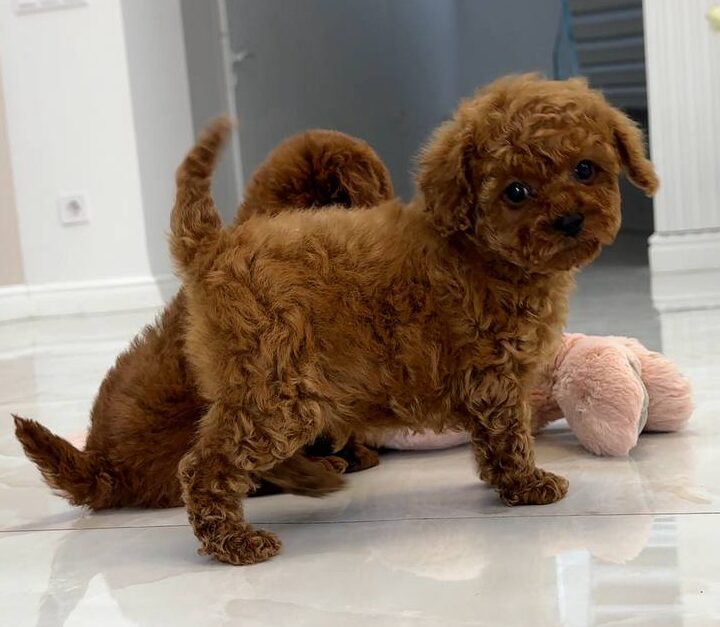
A dense, curly, and non-shedding coat is a trademark of purebred poodles. The curls should be tight and springy, not loose or wavy. - Tail Set
The tail is set high, carried upright, and may be docked in some regions. It should not curl over the back like in other breeds. - Gait
Movement should be springy and light. Purebred poodles walk with confidence and elegance, not with a heavy or clumsy gait.
How can I tell if a poodle puppy’s coat type and color are consistent with purebred lines?
Coat type and color are strong indicators of breed purity. A genuine poodle puppy will always show distinct coat features.
- Coat Texture
Poodle coats are dense and curly. If the coat is flat, silky, or straight, the puppy may not be a purebred poodle. - Hypoallergenic Coat
Poodles are known for their low-shedding, hypoallergenic coats. Shedding or excessive dander may indicate a mix. - Recognized Coat Colors
Official purebred poodle colors include black, white, apricot, cream, brown, silver, gray, red, and blue. Variations outside these may indicate crossbreeding. - Consistency in Color
A purebred poodle’s coat should be even in color without irregular patches. Multi-colored or patterned coats (like merle) are not accepted in major kennel clubs. - Coat Development Over Time
Poodle puppies may experience coat changes as they grow, but the curly texture remains constant. Puppies that lose curl or develop straight hair are not purebred. - Parti Poodles
While parti (two-tone) poodles exist, they are not always recognized in all registries. They are, however, still considered purebred if lineage is proven.
What role do size classifications (Toy, Miniature, Standard) play in confirming purebred poodles?
Size classification is an important part of breed standards and helps determine if a puppy belongs to one of the recognized poodle groups.
- Toy Poodles
Stand under 10 inches tall at the shoulder. They are the smallest category but must still maintain square proportions and breed characteristics. - Miniature Poodles
Stand 10–15 inches tall. Miniatures are slightly larger than toys but are still compact with the same elegant features. - Standard Poodles
Stand over 15 inches tall at the shoulder. They are athletic, larger in bone structure, but still refined in appearance. - Growth Consistency
Puppies should grow in proportion to their parents’ size category. A toy poodle puppy should not suddenly grow to miniature or standard size. - Breeding Integrity
Ethical breeders do not cross toy with standard directly. Such breeding can lead to health complications and irregular sizes. - Registration Standards
Kennel clubs only recognize these three size groups. If a breeder claims a size outside of these categories, it is a red flag.
How important are pedigree papers in proving that a poodle puppy for sale is purebred?
Pedigree papers are one of the strongest proofs of a purebred puppy’s authenticity. They serve as a record of lineage and ownership.
- Verified Lineage
Papers show the puppy’s parents, grandparents, and beyond. This helps confirm that no crossbreeding has occurred in recent generations. - Kennel Club Registration
Reliable registration bodies like the AKC or CKC validate purebred status through official paperwork. - Health and Breeding Transparency
Pedigree certificates sometimes include health clearances. This proves the breeder follows ethical breeding standards. - Fraud Prevention
Fake or missing papers are a sign of dishonest breeding. A reputable breeder will always provide documents without hesitation. - Ownership Tracking
Registration papers protect both buyer and breeder by documenting transfer of ownership. - Show and Breeding Eligibility
Purebred puppies with papers are eligible to participate in shows and may later be considered for ethical breeding programs.
What health certifications should a breeder provide to ensure a poodle puppy is purebred and healthy?
Health certifications protect you from buying a puppy with hidden genetic issues. They also show that the breeder takes responsible steps to ensure long-term wellness.
- Orthopedic Clearances
Purebred poodles are prone to hip dysplasia and patella luxation. A reputable breeder should provide OFA (Orthopedic Foundation for Animals) or PennHIP certification showing the puppy’s parents are free of these conditions. - Eye Health Testing
Progressive Retinal Atrophy (PRA) is a known concern in poodles. Breeders should offer eye exam results from the Canine Eye Registry Foundation (CERF) or equivalent. - Genetic Screening
DNA tests can rule out diseases like von Willebrand’s disease (a bleeding disorder) and degenerative myelopathy. Purebred breeders invest in genetic testing for both parents. - Routine Veterinary Records
Vaccination records and regular wellness checks are essential. This demonstrates consistent care and ensures puppies are protected from common illnesses. - Proof of Deworming
Reputable breeders provide evidence of deworming schedules, showing proactive care before adoption. - Health Guarantee
A breeder should back their puppies with a written health guarantee, covering congenital conditions for a set period (often one year). At Fancy Toy Poodles, we provide a 30-day full refund or replacement policy for added protection.
Why should I ask to see both parents when buying a poodle puppy for sale?
Meeting both parents gives you an accurate picture of what your puppy will look and act like as an adult.
- Size Prediction
By viewing the parents, you can confirm whether the puppy will grow into a toy, miniature, or standard poodle. This avoids surprises in adult size. - Coat Quality
Seeing the parents’ coats helps predict the texture and maintenance needs of the puppy’s coat. Healthy, curly coats indicate strong poodle genetics. - Temperament Clues
Behavior traits like friendliness, energy level, or shyness often pass from parents to puppies. Observing parents helps set expectations. - Proof of Purity
If both parents are registered purebred poodles, their offspring are also purebred. This eliminates doubts about crossbreeding. - Health Condition Check
Parents should look healthy, active, and free of obvious issues such as lameness or eye problems. Sickly or poorly kept parents raise concerns about breeding quality. - Breeder Transparency
Responsible breeders welcome buyers to meet parents. Avoid breeders who refuse, as this is often a red flag.
What temperament traits are typical of purebred poodles, and how can I recognize them in puppies?
Temperament is one of the strongest indicators of poodle purity. Poodles are famous for intelligence, energy, and affection.
- High Intelligence
Purebred poodles are quick learners and often excel at commands, tricks, and problem-solving. A curious, responsive puppy is a positive sign. - Playful Energy
Purebred poodles love activity. Puppies should be lively, interactive, and enjoy playing with toys or people. - Social Nature
Poodles are friendly and bond easily with humans. Puppies should seek attention rather than avoid it. - Confidence
A healthy, well-bred poodle puppy will be curious about new sounds and environments, not fearful or aggressive. - Adaptability
Purebred poodles adjust well to indoor and outdoor settings. Puppies should transition easily between play and rest. - Balanced Personality
While energetic, purebred poodles should not display excessive nervousness or hyperactivity. Extreme shyness or aggression is a warning sign.
Can DNA testing confirm whether a poodle puppy for sale is purebred?
Yes, DNA testing is one of the most accurate tools for confirming breed purity. It provides scientific evidence rather than visual guesswork.
- Breed Identification
DNA tests compare your puppy’s genetic profile against breed databases. If the test matches the poodle breed markers, it confirms purity. - Health Insights
In addition to breed confirmation, DNA tests often reveal genetic risks such as PRA or heart conditions. This helps with long-term care planning. - Accuracy
DNA testing is over 95% accurate when performed by reputable laboratories like Embark or Wisdom Panel. - Convenience
Tests use a simple cheek swab, making them non-invasive and easy for breeders and buyers. - Proof for Buyers
DNA certificates serve as evidence when purchasing. At Fancy Toy Poodles, we can provide DNA-backed proof of our puppies’ purebred status. - Supplement to Papers
While DNA testing confirms breed, it does not replace pedigree lineage records. Both should be reviewed together.
How do ear shape and tail set help identify a purebred poodle puppy?
Small details like ears and tails may seem minor, but they are important breed identifiers.
- Ear Shape
Purebred poodles have long, flat ears covered in curly hair. They hang close to the head and are not short or perky. - Ear Placement
The ears are set at or slightly below eye level. High-set ears suggest another breed influence. - Tail Set
The tail of a purebred poodle is set high and carried straight up. It should not curl over the back or droop low. - Tail Docking
In some regions, breeders dock tails for traditional appearance. Whether docked or left natural, the set remains upright. - Balance and Movement
Correct ear and tail positions balance the poodle’s elegant structure. Irregularities may indicate mixed breeding. - Breed Standard Compliance
Both ear and tail features are clearly outlined in kennel club standards. Purebred puppies should consistently show these traits.
What body proportions and overall structure should a purebred poodle puppy have?
Purebred poodles are known for their balanced, square-shaped build and elegant structure. These proportions are part of the official breed standard.
- Square Frame
A purebred poodle should appear square. The length of the body (from chest to rump) should match the height at the withers (shoulder). Puppies that appear too long-bodied may not be purebred. - Straight Back
The topline should be level, not sloped or arched. This creates balance in the puppy’s stance and movement. - Chest and Ribs
The chest should be deep enough to reach the elbows, with well-sprung ribs. This gives a healthy, athletic appearance. - Leg Proportions
Legs should be straight and long enough to support the square frame. Bowed legs or short legs suggest mixed lineage. - Gait and Movement
Purebred poodles move with a springy, light, and effortless gait. Puppies that walk awkwardly or heavily may not conform to the breed. - Head-to-Body Ratio
The head should be in proportion to the body, neither too large nor too small. Balance is key in the breed’s overall look.
How can I identify a reputable breeder who sells only purebred poodle puppies?
A breeder’s reputation is one of the strongest signs you’re buying a true purebred puppy. Responsible breeders are transparent, ethical, and consistent.
- Proof of Registration
Reputable breeders provide pedigree papers from recognized kennel clubs. They do not delay or make excuses when asked for documentation. - Health Testing
Ethical breeders complete health testing on parent dogs and openly share certifications. This ensures healthier puppies. - Clean, Safe Environment
Puppies should be raised in a clean, home-like setting. A quality breeder avoids overcrowded kennels and ensures socialization. - Parent Introduction
Meeting the parents is standard with reputable breeders. This confirms size, temperament, and coat quality. - Positive Reviews
Look for testimonials or word-of-mouth recommendations. Reputable breeders build trust through years of satisfied families. - No Pressure Sales
Ethical breeders never pressure buyers. They care where their puppies go and may even ask questions about your lifestyle to ensure a good match. - Ongoing Support
Reputable breeders offer lifetime support, guidance, and guarantees. At Fancy Toy Poodles, we continue to assist families after adoption with care tips and product recommendations.
Does the price of a poodle puppy reflect whether it is purebred or not?
Price can indicate breeding quality, but it is not the only factor. Very low prices often raise red flags, while higher costs reflect responsible breeding.
- Low Prices as Warnings
If a poodle puppy is advertised far below the average market range, it may not be purebred or may lack health testing. - Costs of Breeding
Purebred poodles require investment in health tests, high-quality food, veterinary care, and registration fees. These costs are reflected in the price. - Market Averages
In the United States, toy and miniature poodles often cost between $1,500 and $3,000, while standard poodles can range higher. Prices outside this range require extra caution. - Show vs. Pet Quality
Show-quality purebreds with top lineage often cost more than pet-quality puppies. Both can still be purebred, but price reflects pedigree prestige. - Health Guarantees and Refunds
Reputable breeders include written health guarantees. This adds value and reassurance to the price.
How does early socialization indicate that a breeder is raising true purebred poodle puppies?
Early socialization is a marker of responsible breeding and directly affects a puppy’s long-term temperament.
- Exposure to People
Puppies should be handled daily and introduced to different people. Well-socialized puppies are confident and friendly. - Household Noises
Purebred puppies raised in homes adapt to everyday sounds like vacuum cleaners, phones, and TVs, making them easier to settle into family life. - Interaction with Other Dogs
Socialization with littermates and adult dogs teaches manners and prevents behavioral issues later. - Positive Play
Puppies should be encouraged to play with safe toys and objects. This helps develop problem-solving skills and builds confidence. - Training Foundations
Ethical breeders begin simple training, such as crate familiarity or responding to names. This prepares puppies for smooth transitions to new homes. - Stress Prevention
Puppies raised in loving, stimulating environments are less likely to develop fear-based behavior problems.
Which other breeds are commonly mistaken for purebred poodle puppies?
Many breeds and mixes resemble poodles, but knowing the differences helps avoid confusion.
- Doodles (Labradoodle, Goldendoodle, etc.)
These are poodle mixes with Labradors, Golden Retrievers, and other breeds. Their coats may appear curly but are often looser and less uniform than a purebred poodle’s. - Portuguese Water Dogs
This breed has a curly coat but tends to be stockier and less refined in build compared to poodles. - Bichon Frise
Bichons also have curly coats but are smaller, with rounded skulls and a more compact appearance. - Barbet
This French water dog resembles the poodle but has a woolly, unkempt coat instead of the tight curls of a poodle. - Mixed-Breed Poodles
First-generation mixes can strongly resemble poodles but may lack consistent features like square proportions or high-set tails. - Coat Texture Differences
True poodles have dense, tightly curled coats. Other breeds may appear fluffy, wavy, or loosely curled, which helps distinguish them.
Conclusion
Knowing if a poodle puppy for sale is purebred requires looking at multiple factors: paperwork, physical traits, parent verification, health testing, and breeder reputation. Each detail—from ear shape to coat consistency—tells part of the story. At Fancy Toy Poodles, we make this process clear and stress-free by providing pedigree papers, DNA results, health certifications, and full transparency about our sires and dams.
For over 10 years, our family has raised toy, miniature, and teacup poodles with love and care, ensuring that every puppy we place is a healthy, purebred companion. We stand behind our puppies with a 30-day full refund or replacement policy, worldwide delivery in 24–48 hours, and lifetime support for every family we serve.
When you choose Fancy Toy Poodles, you choose more than a puppy—you choose health, authenticity, and the joy of welcoming a true purebred poodle into your home.